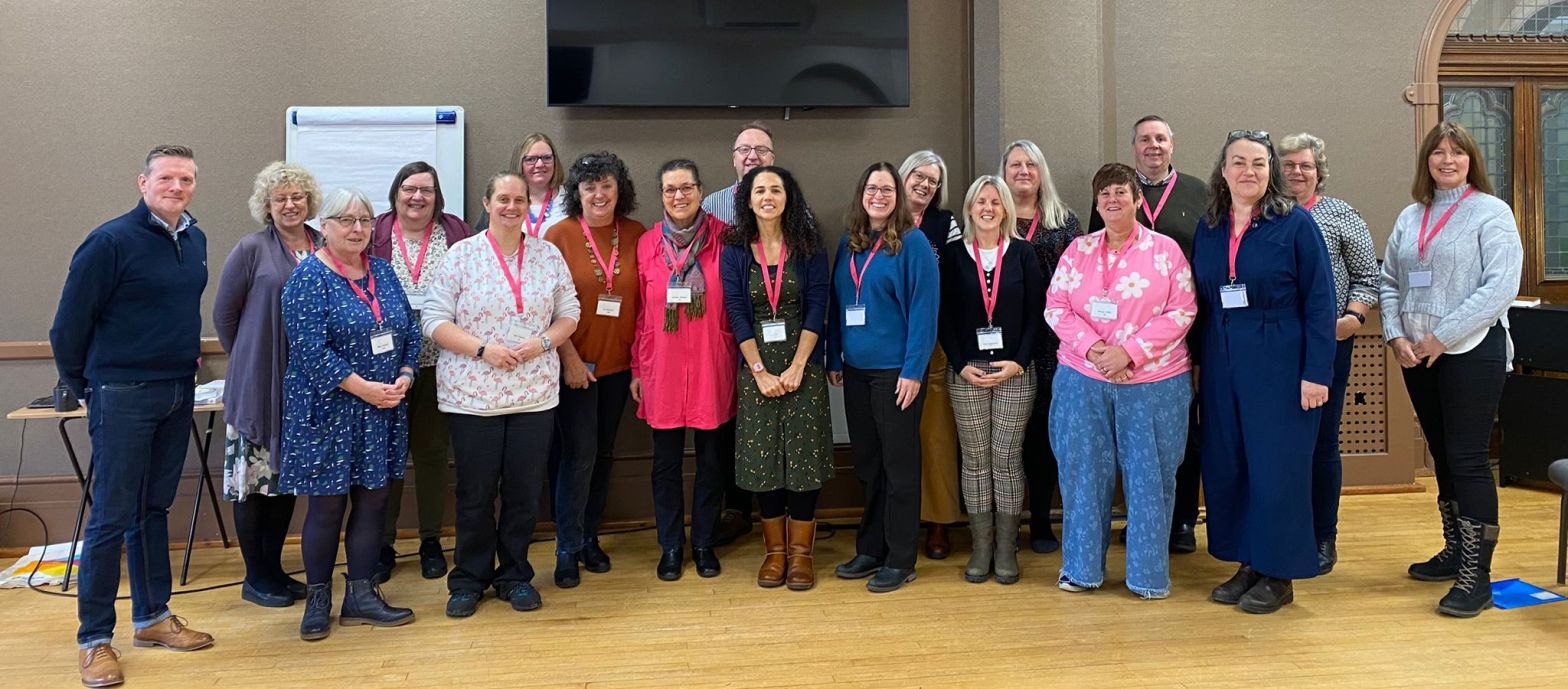
As our media fills up with stories of abuse and coverups within religious organisations, it was very timely that children and family ministry denominational leaders met to discuss ‘Safeguarding’ at the Children’s Ministry Network Conference November gathering at High Leigh Conference centre.
Justin Humphreys, CEO of thirtyone:eight, led us through the thorny landscape of spiritual abuse (a form of emotional and psychological abuse characterised by a systematic pattern of coercive and controlling behaviour in a religious context), and how we can move from fear to empowerment when dealing with safeguarding matters. As we dissected ‘what went wrong’ in a variety of case studies, we considered that better outcomes are possible when we, as leaders, are attentive to our own ‘dark side’ and temptations, as well as others, allowing the Holy Spirit to work in and through us. Healthy leaders need healthy accountability, humility, vulnerability and compassion. We need to model a leadership that values people more than reputation. It’s a tall order, but that’s what Jesus did!
We should view our safeguarding practice as part of our hospitality, as we seek to welcome the stranger, children and young people into our Christ-centred communities.
So how do we build safer, healthier culture and systems? We were offered 6 top tips:
- Listen well to accounts of past events and lived experiences when considering our setting and how it operates (e.g. how was a previous disagreement or disclosure of abuse or misconduct handled?) It’s important to create spaces to listen to people, including those we might not want to hear from! Offer an invitation, but respect that the person might not yet be ready to ‘go there’ and they can come back at any time. This person may be a child or young person, so have we created an equitable space for them to feel fully able to use their voice?
- Communicate well How do we communicate openly and publicly that our setting is a ‘safe space’? For example, do we have details of our ‘safeguarding’ policy and who to contact, on our website and public notice boards? It’s important to remember that safeguarding goes beyond rules and regulations and is about how people feel treated. Consider your own setting for a moment and if people feel safe when they attend a gathering, whether it’s in a church, community hall or an intergenerational small group meeting in a home.
- Managing power This is about the formal and informal power within a setting and how we empower and include people. The biblical model of power is that it comes with responsibility and accountability. This invites us as leaders to consider how we demonstrate responsibility for the power we carry and to whom are we accountable. How do we empower others? Empowering others in a Messy Church setting, for example, might mean inviting new people, including children and young people, onto the planning team, and going with their suggestions, even though you think your ideas might work better! Remember to follow safe volunteer recruitment practices.
- Building transparent structures concerns how people are valued by having transparent reporting and accountability lines. We need to create a culture where unofficial or unspoken rules are lovingly challenged and deconstructed to avoid the development of ‘shadow’ cultures. An example my young adult children recount is how as children they were terrified of the older woman who fiercely monitored the biscuit tin at the end of a church service. They were never allowed a second biscuit, and collectively, a group of children would spend most Sunday’s trying to thwart this unspoken rule, that led to unholy grumblings between the generations. My kids never told me at the time, and whilst this is a trivial example, it’s important to remember that there may be age-related or ethnic cultural differences that affect if, when and to whom a person may voice their concerns. This highlights the importance of having a mix of people, ages and ethnicities in leadership teams where possible.
- Establishing good governance is about the way the setting is controlled and governed. How do we see our values played out? If we see something different to the values we proclaim, how is this challenged in a sensitive and timely way?
- Modelling safe behaviours in our everyday activities, that convey the importance of healthy attitudes and beliefs for all. This doesn’t mean that we have to avoid all potentially risky activities and be left with just ‘safe’ colouring sheets. It’s about completing risk assessments, thinking through mitigations and sharing these with team members and participants. It also goes beyond what we do and includes how we go about life. Effectively, does our behaviour reflect Jesus? Do we walk the walk, as well as talking the talk? Are we authentic in our words and actions, a prerequisite for younger generations? For example, as leaders, are we good at admitting when we got something wrong, and humble enough to say sorry?
Our journey to creating safe spaces is about humble, vulnerable and accountable leadership. The good news is that we don’t have to do this alone. Not only did Jesus send us the Holy Spirit to be our guide and helper (John 14:16), denominational safeguarding teams and organisations, such as thirtyone:eight, are also here to help.
What will you do differently as a result of reading this blog?
Perhaps it’s time for your team to book onto some safeguarding training?
Is there unhelpful behaviour happening in your context that you need to challenge in a sensitive and timely way? If you need help talking about safer culture in your setting, check out thirtyone:eight resources, that includes posters, children’s educational resources (Raise your Roar with Roarry) and the ‘Culture Conversation Cube’ – a resource to start conversations on these six areas with your team.
 Children’s Ministry Network